
What is your period trying to tell you about your health?
Heavy and clotty. Light and short. Painful. Late. Early. Exhausting. Or accompanied by a week of feeling anxious, flat, irritable and nothing like yourself. We often think about these as ‘period problems’. But your period isn’t an isolated monthly event. It’s the visible end point of an entire cycle of hormonal communication happening throughout the month.
And while a symptom can’t tell you exactly what’s happening inside your body, patterns in your cycle can provide useful clues about where it might be worth looking more closely.
Here are some of the ones worth paying attention to.
Heavy, clotty periods
An occasional minor clot during a heavier day of your period isn’t necessarily cause for concern. But regularly experiencing heavy bleeding (defined as more than 60ml of blood per period = 12 or more fully soaked pads or tampons per period) or passing clots with each period is noteworthy of mention. One piece of this hormonal picture can be related to ovulation – or this not occurring. Prior to ovulation during the first “half” of the cycle, estrogen helps stimulate the growth and thickening of the uterine lining. After ovulation, progesterone stabilises that lining helping prepare it for a fertilised egg to embed. Imagine progesterone compacting the lining so it appears thinner. It’s not technically thinner but it’s more stable. If progesterone production from the corpus luteum (the crater that remains on the surface of the ovary after ovulation) is poor (due to stress, nutrient insufficiencies or deficiencies etc.) or if ovulation doesn’t occur, there is less (or no) progesterone to counter estrogen’s effects on the endometrium, allowing the lining to become thicker and potentially contributing to heavier bleeding.
In Traditional Chinese Medicine, menstrual blood clots are related to the liver. This makes sense when you consider the liver is responsible for major aspects of estrogen detoxification. It may be that you’re ovulating (so therefore producing progesterone) but have an “overwhelmed” liver that’s struggling with estrogen clearance. Or your liver and blood clot picture might be related to iron deficiency. Heavy menstrual bleeding can also occur with fibroids, polyps, adenomyosis, endometriosis, thyroid dysfunction, bleeding disorders and some medications.
Feeling anxious, low or unusually irritable before your period?
If you can almost pinpoint the day of your cycle based on when your mood shifts, that pattern is useful information. After ovulation, progesterone rises during what’s known as the luteal phase. Progesterone and its metabolites interact with signalling pathways in the brain and the rest of the nervous system, which is one reason researchers are interested in their relationship with mood, anxiety and sleep. A progesterone metabolite binds to GABA receptors which has a calming effect so when you aren’t producing enough progesterone, anxiety can elevate. Changes in how you feel in the lead up to your period can indicate that progesterone levels are not where they ideally need to be at that part of your cycle. They key is to work out why.
Sometimes stress hormones can disrupt the signals that lead to ovulation. And sometimes, the body simply isn’t getting enough of the energy and nutrients it needs to keep those processes running as they should. Iron, iodine, zinc, magnesium, B vitamins and vitamins C and D all have roles to play in the wider picture of reproductive and hormonal health. Because before we start asking how to “balance” our hormones, it’s worth asking whether the body has what it needs to make and regulate them in the first place.
Sleeping poorly in the lead-up to your period
Notice yourself tossing and turning more in the week before your period? You’re not imagining the timing. Sleep can change across the menstrual cycle and women with premenstrual symptoms commonly report poorer sleep quality, particularly during the luteal phase.
Progesterone is usually part of this picture, but so might be changes in body temperature, melatonin and the broader fluctuations in reproductive hormones that occur as your period approaches. And sleep and premenstrual symptoms can feed into each other. A few nights of poor sleep can make irritability, anxiousness, cravings and fatigue feel much louder. Which makes changes in sleep another useful pattern to track alongside your other premenstrual symptoms.
Exhausted before or during your period?
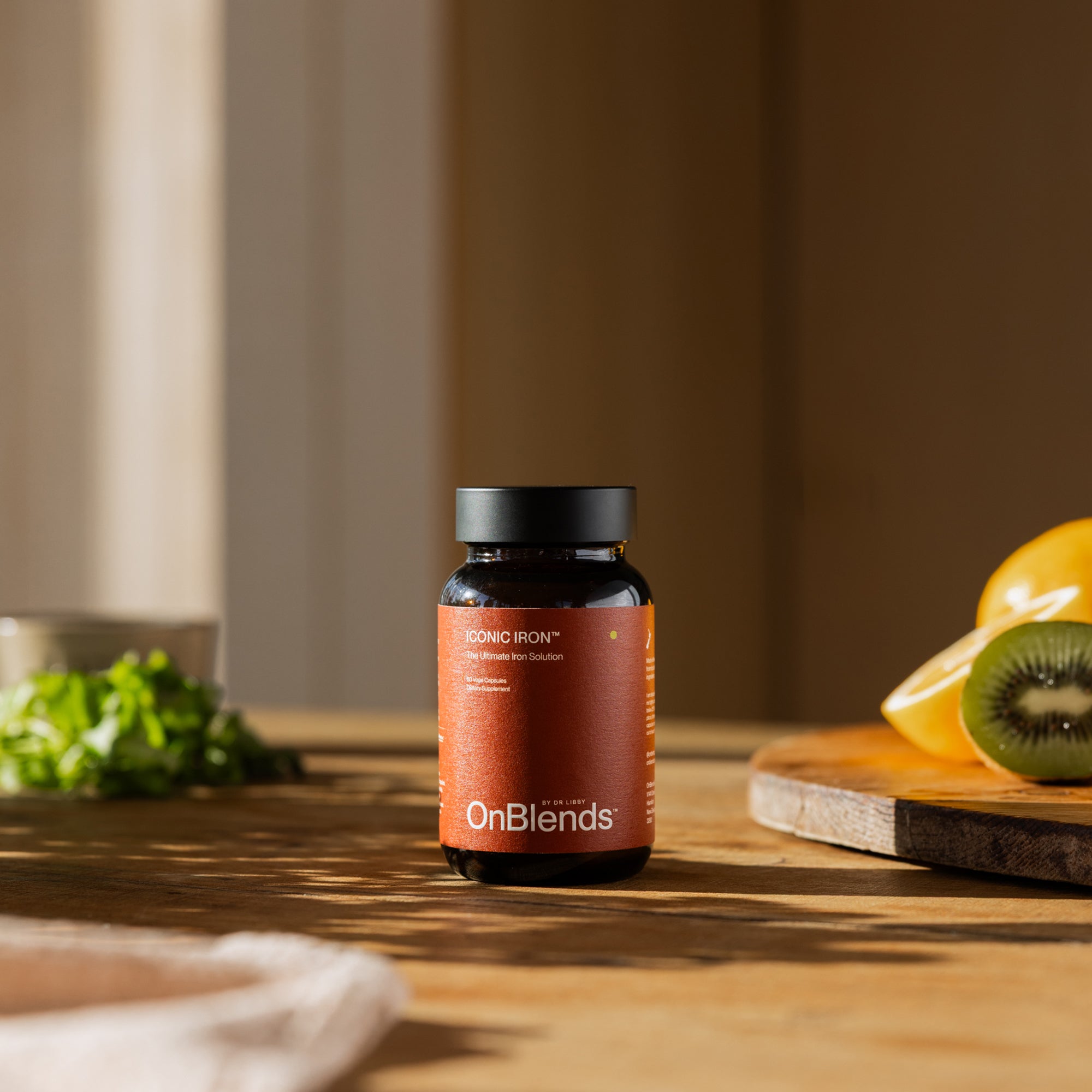
It’s easy to put period fatigue down to hormones. Iron always deserves a closer look. Menstruation means losing blood and therefore iron every month. The heavier your menstrual bleeding, the greater that loss is. Over time, heavy periods can contribute to iron deficiency and eventually iron-deficiency anaemia. Some teenage girls are already iron deficient before they start menstruating so the deficiency is exacerbated rather than simply initiated at this time.
Fatigue is one possible clue, but look at the wider picture too. Has your energy progressively declined? Are you struggling with exercise you previously managed easily? Feeling weak, lightheaded or breathless? Experiencing headaches or difficulty concentrating? If that sounds familiar, particularly alongside heavy periods, it is worth asking your healthcare professional about an iron blood test (ask for “iron studies”) rather than simply accepting that feeling depleted is part of having a period.
Sore, swollen breasts before your period?
Breast tenderness is a common premenstrual symptom and often follows a cyclical pattern. Breast tissue responds to reproductive hormones, so the changing levels of estrogen and progesterone across the menstrual cycle can influence how your breasts feel. If tenderness reliably appears before your period and disappears once it begins, the cyclical nature itself can be informative. This picture is usually due to too much estrogen and not enough progesterone. Iodine deficiency can also drive tender breasts.
Bloating and fluid retention
If your jeans feel tighter a few days before your period, it doesn’t mean anything has changed about your body composition. Bloating and fluid retention are common premenstrual symptoms. Hormonal changes across the luteal phase can influence fluid regulation and gastrointestinal function. Changes in bowel habits, appetite and food choices around this time can add another layer.
Again, timing gives you useful information. If the bloating reliably appears before menstruation and resolves once your period arrives, there’s a good chance your cycle is part of the picture and the likely culprit is too much estrogen (liver-related) and/or not enough progesterone.
Periods that suddenly become irregular
A menstrual cycle relies on communication between your brain and ovaries through what’s known as the hypothalamic–pituitary–ovarian, or HPO, axis. And that communication is influenced by what’s happening elsewhere in your body and in your world. Psychological stress, inadequate energy intake, iron deficiency, substantial body fat changes (down or up) and consistent, intense exercise can all disrupt ovulation and menstrual regularity.
Irregular cycles can also occur with conditions including PCOS and thyroid dysfunction. For some women, irregularity becomes more common during perimenopause as ovarian hormone production becomes increasingly variable. So if a cycle that has historically been predictable suddenly becomes anything but, zoom out. What else has changed?
Very painful periods
If period pain regularly stops you working, exercising, sleeping or doing the things you normally do, this is not something you have to endure. Significant menstrual pain can have a number of causes, including endometriosis and adenomyosis. Pain is a symptom, not a diagnosis. But it is information worth acting on.
Some causes of period pain can include too much estrogen (liver-related), not enough progesterone (usually requires adrenal/stress support and/or ovarian follicle support), inflammation (usually due to a poor-quality diet, too high in ultra-processed foods, and poor gut health and/or stress) or magnesium deficiency.
Where does the liver fit into all of this?
There’s another organ involved in the hormonal picture that doesn’t get nearly as much airtime as the ovaries: your liver. The liver is involved in metabolising hormones, including estrogen, after they’ve done their job. These metabolites are then sent to the gut to be eliminated from the body. Hormones are produced, transported, converted, metabolised and eliminated through interconnected systems. Your cycle is influenced by the health and function of the body as a whole, which is one reason why supporting healthy liver function and gut health can also be highly relevant to hormonal health, particularly given the liver’s role in metabolising hormones such as estrogen.