
I thought my ferritin was fine. Then I found out what 72 felt like.
By Lauren
There are two days between the birth of my baby and the birth of Iconic Iron. I know this because, as a recovering Type A perfectionist, I have become the kind of person who loves tracking her own blood test results. It wasn't always this way. Like so many of us, I used to hear “everything's normal” after a blood test and leave it at that. Then I went to Gwinganna Retreat & Spa and started paying much closer attention to my own results. I realised there can be a lot of information hiding behind that one word: normal.
So I started looking at the actual numbers. Watching how they changed. Paying attention to what was happening in my life at the time and, importantly, how I actually felt. And that's how ferritin entered the picture.
Before pregnancy, my ferritin was “normal”
Until I wanted to get pregnant, ferritin was something I barely paid attention to. Looking back through old blood tests, mine had generally hovered somewhere around 40–50. It sat within the reference range, so I hadn't given it much thought. But I was also living a stressful life, working a stressful job and taking care of myself rather inconsistently. I didn't know what my baseline meant or how my iron stores might relate to how I felt.
Then I got pregnant for the first time, in my 40s. And my ferritin dropped to around 17. For weeks, I could barely move from the couch. Women deserve so much more credit for what their bodies pull off growing a human. My doctor and midwife suggested iron supplements from the pharmacy, but I'll be honest: I really struggled with them. I battled through, then thankfully started to feel more human again in my second trimester.
And then I had the baby. Which brings the pure joy of finally meeting this tiny person you've been waiting for and the pure terror of bringing them home and realising you have absolutely no idea what you're doing.
Two days earlier, Dr Libby had had a new arrival too
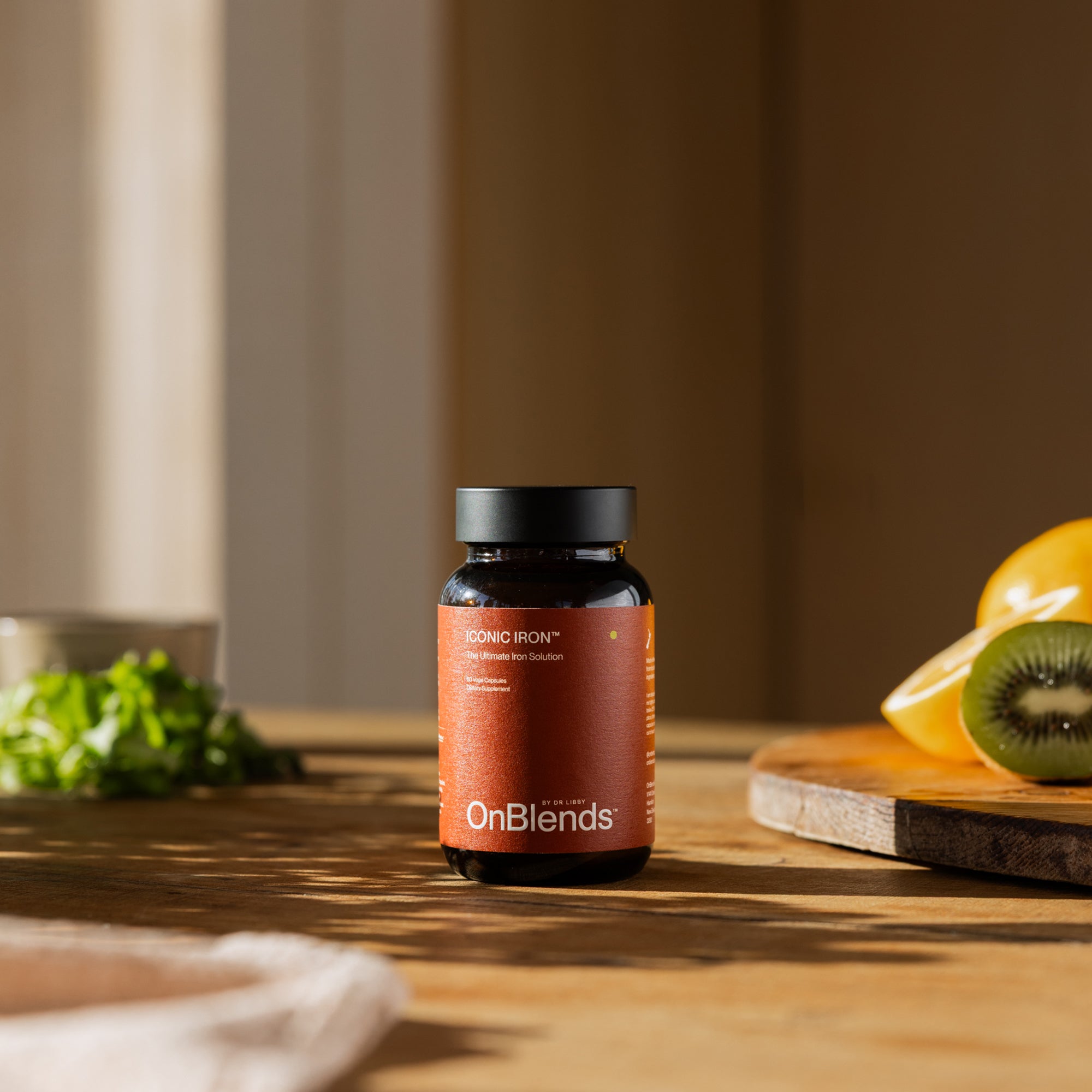
Little did I know that one of my longtime heroes, Dr Libby, had been busy bringing something new into the world at almost exactly the same time. Iconic Iron launched two days before my baby arrived. What are the odds?
And it turns out her new arrival would become my second favourite of the week. Somewhere in my sleep-deprived postpartum haze, I managed to get online and place an order less than two weeks after giving birth. I'd just grown and birthed a baby, lost blood during birth, discovered the torture of sleep deprivation and was breastfeeding around the clock.
I could barely organise myself enough to leave the house for coffee, let alone get a blood test. But I knew I didn't feel like myself.
Then the fog started to lift
At my six-week postpartum appointment, my GP gave me a form for blood tests. I sat in that appointment and cried so much that she also screened me for postpartum depression. I wasn't there, but I was close enough for it to be a conversation. It took me until around 13 weeks postpartum to actually get those bloods done.
By then, I'd been taking Iconic Iron every day since it arrived in early June. And somewhere along the way, I'd started to notice something. A fog had lifted. I felt sharper. More myself. More together, even though I absolutely was not. My baby was not a sleeper. Fifteen months later, he still isn't. But even in the middle of the postpartum trenches, I felt better. Things felt easier. The days felt brighter.
And I had this feeling that something was helping me. Then I got my blood results. My ferritin was 72. Seventy-two. I’d never seen it there before. This was while I was postpartum. While I was breastfeeding. While I was sleeping three or four hours a night. While my body was still recovering from pregnancy and birth and I had a tiny human attached to me almost 24/7.
I honestly couldn't believe it. For me, Iconic Iron had become very deserving of its name.
Then I saw Dr Libby in an airport lounge
A few months later, I was sitting in the international Koru Lounge at Auckland Airport with a baby strapped to me. I was about to attempt our first international flight without my husband. And then I saw Dr Libby. Any understanding I might once have had of appropriate social decorum immediately disappeared. I basically ran at her.
I told her about my results. I told her I was a first-time mum in my 40s and that I genuinely felt like what she'd created had helped me feel like I had my body and my brain back at a time when I desperately needed both. She cried. I cried. And it felt so bloody good.
Then I moved to London and my Iconic Iron supply ran out
Fast-forward and we're living in London. I managed to stash a couple of months' supply of Iconic Iron among the “critical” luggage my husband was adjudicating as we moved countries with a baby. Apparently EVERYTHING is critical when you're moving countries with a baby.
Eventually, though, I ran out. I went without Iconic Iron for more than three months, and I could feel a difference. After registering with the NHS, I had my bloods checked again. My ferritin was back down to 34.
That result sat within the laboratory's reference range, but this time I didn't simply hear “normal” and switch off. Because now I had something I'd never had before: my own history. I knew what 34 felt like in my body. I knew what 72 had felt like. I had results from different points in my life to discuss with my healthcare team rather than a single number in isolation.
So I messaged the OnBlends team to ask how I could get my hands on Iconic Iron before returning to New Zealand a few months later. And as much as I assumed Dr Libby would have completely forgotten the slightly unhinged woman wearing a baby who ran at her in an airport lounge, the team wrote back and remembered me. My love for her, for OnBlends and for this iconic little product grew even bigger.
The thing I wish I’d understood sooner
Get interested in your own numbers. Ask to see your blood test results. Keep copies. Look at how they change over time and talk them through with your healthcare professional. And pay attention to your body too. A laboratory reference range is useful, but it's not your entire health story. Your symptoms, health history, stage of life and other blood markers all provide important context. I spent years hearing “normal” and assuming there was nothing more for me to know.
Now I ask questions, I pay attention, and I know my own numbers. And if you ever see Dr Libby in an airport lounge? Run at her. She can handle it.