
Eating more fibre but still constipated?
When it comes to constipation, fibre gets most of the attention – and with good reason. Fibre can increase stool bulk and, depending on the type, help stools hold onto water, making them easier to pass. Yet, if you’re eating plenty of vegetables, adding chia seeds to everything and still not going regularly, simply adding more fibre may not be the answer. Because a bowel movement is the end result of quite a few things working together.
First, let’s talk fibre
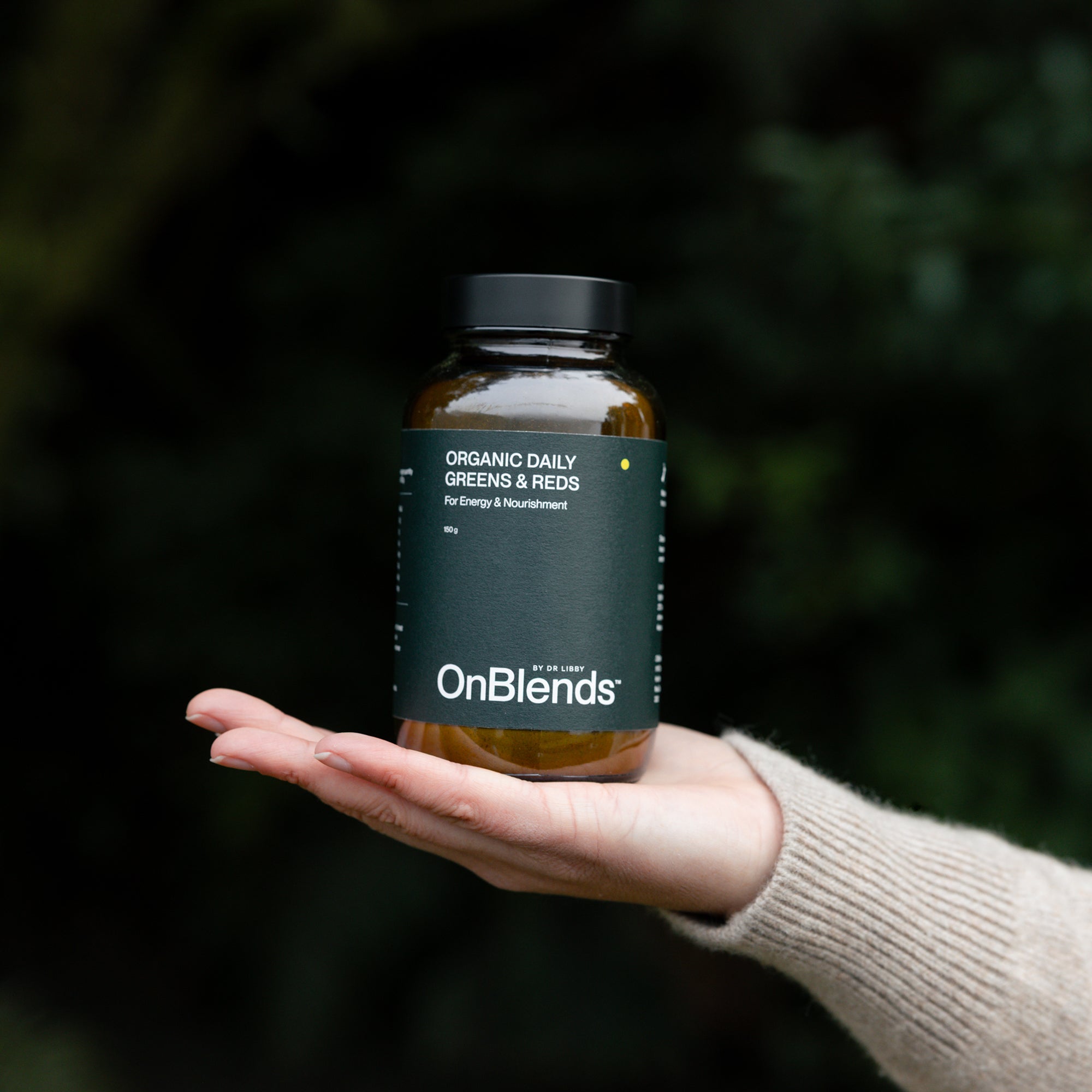
Not all fibre behaves the same way. Soluble fibre absorbs water and forms a gel-like substance in the digestive tract. Some types are also fermented by our gut bacteria. Insoluble fibre adds bulk to stool and can help move material through the digestive tract. Whole vegetables, fruit, legumes, nuts, seeds and wholegrains can provide a mixture of both. That’s where Organic Daily Greens & Reds can make it easier to add greater plant variety to your day. It brings together a concentrated blend of broccoli, beetroot, wheatgrass, barley grass, dandelion and blackcurrant to complement the whole plant foods you’re already eating.
But more isn’t automatically better. Increasing fibre too quickly can leave some people feeling more bloated and uncomfortable. Dr Libby has found that, for some, increasing fibre exacerbates symptoms. If you notice fibre doesn't help, even when you are ensuring you are getting adequate hydration, experiment with the source of the fibre and the types. For example, does the fibre in vegies support you well, while the fibre (or potentially other factors) in grains disrupt your bowel function? Everyone is different so observe your pattern. Or work with an experienced health professional to help you understand this better.
Fibre also needs fluid
Think about what happens when soluble fibre meets water: it absorbs it. That relationship matters. Your large intestine naturally absorbs water from its contents as they move through. If a stool becomes dry and hard, it can become more difficult to pass. So before assuming you need another spoonful of psyllium, look at the other half of the equation.
Are you drinking enough water? Particularly important if you’ve recently increased your fibre intake.
Where does magnesium come into it?
Magnesium naturally present in food and mineral water is absorbed in the intestine. What isn't absorbed continues through the digestive tract, where it can help retain water in the bowel. This is the principle behind the osmotic effect associated with magnesium. It doesn’t mean that supplementing magnesium will always be a solution for constipation, but it does give us another reason to consider whether we are getting enough of this essential mineral in the first place.
Whole foods including leafy greens, nuts, seeds, legumes and wholegrains are natural sources of magnesium. Organic Magnesium is crafted from organic pumpkin seeds, offering a food-sourced way to top up your daily intake.
What else is there to consider?
Your bowels don’t work in isolation. Regular daily movement, changes to medications or supplements and even hormonal fluctuations can all influence bowel habits. Sex hormones can influence gastrointestinal motility, while your liver and gut are also involved in the metabolism and excretion of hormones, including estrogens. Bile is another part of this bigger digestive picture. Produced by your liver and stored and concentrated in your gallbladder, bile is best known for helping you digest and absorb fats. But bile acids also interact with the intestine itself, where they’re involved in regulating intestinal secretion and motility. Research suggests that increasing certain bile acids in the colon can accelerate colonic transit and increase stool frequency.
This is also where bitter foods and herbs enter the conversation. They have a long history of traditional use for supporting digestion and are part of the thinking behind Liver Love. The blend contains globe artichoke and gentian, alongside broccoli sprout, St Mary’s thistle and turmeric to support healthy liver function. Interestingly, improvements to bloating and digestive discomfort are also two things we often hear about in the feedback we receive for Liver Love.
So, if you’re constipated, zoom out
Rather than immediately asking, how can I get more fibre?, consider:
- Are you eating a wide variety of whole foods, including plenty of vegetables?
- Are you drinking enough fluid for the fibre you eat to do its job?
- Are you moving your body regularly?
- Are you responding when you feel the urge to go?
- Have any medications or supplements changed recently?
- Has your liver had more work to do lately due to more alcohol or a hormone-related scenario?
- And have any of these factors become ongoing rather than occasional?
Sometimes the most useful question isn’t “What can I take to make myself go?” It’s “Why am I not going comfortably in the first place?”