
The longevity ‘hack’ nobody wants to hear about
Longevity has become one of the biggest conversations in health. We can track our sleep, glucose and recovery. Measure an ever-growing list of biomarkers. Experiment with supplements, protocols and new technologies designed to help us optimise how we age.
And there’s some fascinating science emerging from it all.
But in the search for what’s new, have we started overlooking what we already know? Because the longevity ‘hack’ nobody really wants to hear about is this:
There probably isn’t one.
No single supplement, protocol or intervention can compensate for consistently neglecting the foundations of health. The things that matter are often far less exciting. Nourishment, movement, muscle, sleep, sunshine, metabolic health, connection, managing the demands placed on your body – and making sure it has enough of the nutrients it needs to function well.
None of these is particularly novel. But novel and important aren’t the same thing.
The basics aren’t basic
We tend to use the word ‘basics’ to describe the foundations of health, as though they’re merely the starting point before we graduate to something more sophisticated. But your body never graduates from needing them. Muscle matters at 30 and it matters at 70. Sleep doesn’t become less important because you’ve started tracking your biological age. A sophisticated supplement stack can’t compensate for a way of eating that consistently leaves your body short of what it needs. And no wearable can do the walking, lifting, resting or connecting for you.
The science of longevity may be advancing rapidly. Human physiology hasn’t suddenly abandoned its requirements.
Before optimisation comes sufficiency
There’s another interesting tension in the longevity conversation. We’re increasingly asking what we can add to optimise a particular pathway or process. But before optimisation, there’s a more fundamental question:
Does your body have enough of what it needs in the first place?
Vitamins and minerals aren’t optional extras. They’re essential. Every single day. They participate in the biological processes that keep us functioning, including energy production, cognitive function, immune function, sleep, skin integrity, and normal muscle function. And nutritional needs aren’t static. Dietary intake, life stage, stress, exposure to pollutants, exercise, and the demands we place on our bodies can all influence what we need and whether we’re consistently getting enough.
So while nutrient sufficiency may not sound as futuristic as the latest longevity intervention, it belongs firmly in the conversation.
Where supplements fit
At OnBlends™, we don’t believe supplements are a shortcut to better health; we believe they should support the foundations. That means starting with nourishment, movement, sleep, sunshine, water, muscle, and the other everyday factors that help the body function well – then looking at where targeted nutritional support may genuinely be useful.
It’s why our formulations start with nutrients the body knows and needs, using food-sourced ingredients and medicinal herbs, alongside science-informed formulations designed around how the body absorbs and utilises them.
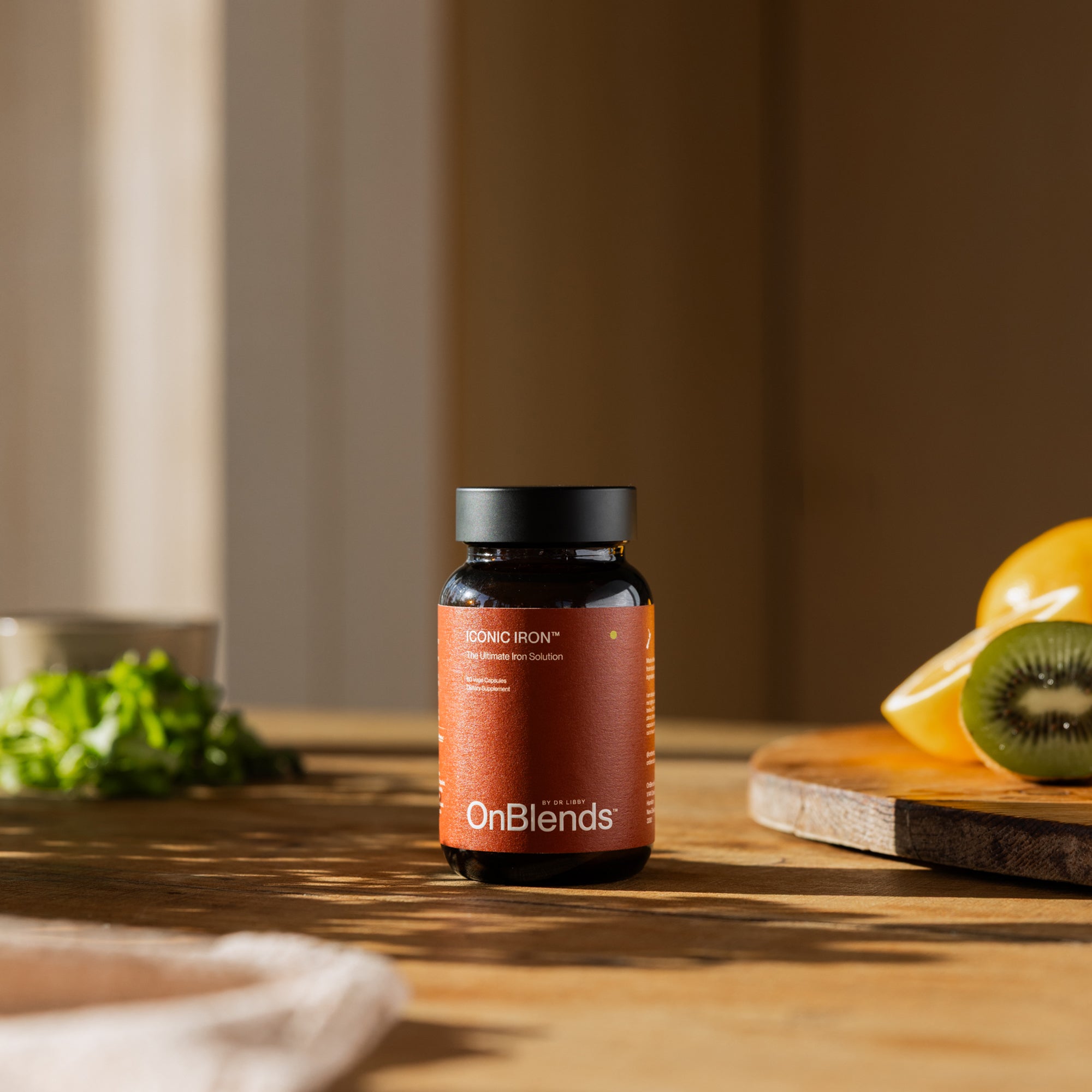
Iconic Iron was developed to provide targeted iron support with co-factors (the nutrients iron needs to be able to work inside you), because iron is fundamental to processes including oxygen transport and energy production. Organic Magnesium provides food-sourced magnesium to support muscle and nervous system function, as well as energy production. Organic Zinc provides food-sourced zinc to support healthy immune function, hormone metabolism and skin integrity. And Organic Daily Greens & Reds provides a broad spectrum of nutrients and phytonutrients from whole food sources to help support everyday nutritional intake and fill the gaps when diet alone doesn’t quite cover everything.
They aren’t ‘longevity hacks’ – and we don’t think they need to be. They’re targeted nutritional support for the body you’re asking to carry you through all those years.
The most powerful things may be the least exciting
Perhaps one of the problems with the word ‘longevity’ is that it points our attention so far into the future. We think about what our health might look like decades from now. But that future is being shaped, in part, by extraordinarily ordinary things happening today. The food you eat, the muscle you use, the sleep you protect, the people you connect with, the stress you recover from and the nutrients you replenish when your body needs them.
There is no single perfect intervention that makes those things irrelevant. And perhaps the future of longevity isn’t about choosing between exciting new science and the fundamentals we already understand. There is room for both. We can remain curious about what’s next while taking seriously what our bodies need now. Because the best longevity strategy might not be a hack at all. It might simply be building stronger foundations, then supporting them intelligently.