Article: Lactoferrin for low iron: does the science really support the hype?

Lactoferrin for low iron: does the science really support the hype?
Lactoferrin is increasingly being promoted as a way to help your body absorb, utilise and obtain more iron. Some people recommend taking it instead of an iron supplement, while others suggest adding it to your existing iron routine to improve the results. The promise sounds convincing, particularly if you've struggled to improve your iron levels or experienced digestive discomfort from conventional iron supplements. And lactoferrin certainly has some fascinating biological functions. But just because a substance plays a role in iron metabolism doesn't necessarily mean taking more of it will correct an iron deficiency.
So what does the research actually tell us?
Does adding lactoferrin to an iron supplement make a difference?
A 2026 systematic review and meta-analysis examined studies comparing iron supplementation combined with lactoferrin against iron supplementation alone in children. The researchers found that adding lactoferrin produced an additional increase in serum ferritin of 3.52 µg/L, on average. However, there was no statistically significant additional improvement in haemoglobin, serum iron or serum transferrin receptor levels.
Why does this matter?
Ferritin is the protein your body uses to store iron, and serum ferritin is an important marker of your iron reserves. Haemoglobin, meanwhile, is the iron-containing protein in red blood cells responsible for carrying oxygen around your body. When someone has iron-deficiency anaemia, improving haemoglobin is an important part of correcting the problem. The review suggests lactoferrin may offer a modest additional benefit for iron stores in children. But it didn't demonstrate an additional improvement in haemoglobin, and we can't automatically assume the same results would apply to adults.
The evidence doesn't currently justify assuming that everyone taking iron would benefit from adding lactoferrin.
What about taking lactoferrin instead of iron?
This is where another clinical trial raises some particularly interesting questions. Researchers conducted a randomised controlled trial involving 555 women with iron-deficiency anaemia. Participants were assigned to receive either 200 mg of lactoferrin, 400 mg of lactoferrin or 60 mg of elemental iron from ferrous sulphate daily. All three groups also received folic acid.
After 12 weeks, the differences were substantial.
Average change in haemoglobin:
| Supplement | Change |
|---|---|
| Lactoferrin, 200 mg daily | −0.2 g/dL |
| Lactoferrin, 400 mg daily | 0.0 g/dL |
| Ferrous sulphate, providing 60 mg elemental iron daily | +1.1 g/dL |
In other words, neither lactoferrin dose produced a meaningful improvement in haemoglobin. In the 200 mg group, the average haemoglobin level actually decreased slightly.
And what happened to their iron stores?
Serum ferritin also improved substantially more in the ferrous sulphate group than in either lactoferrin group. The researchers concluded that lactoferrin was inferior to ferrous sulphate for improving haemoglobin in these women over 12 weeks. This doesn't mean lactoferrin has no biological value. Nor does it mean it could never have a useful role alongside iron supplementation in particular circumstances.
But it does raise an important distinction: Being involved in iron metabolism is not the same as supplying enough iron to correct a deficiency.
So what does lactoferrin actually do?
Lactoferrin is an iron-binding protein found naturally in milk and other bodily secretions. It's particularly abundant in colostrum, the first milk produced after birth. One of its important functions is helping protect the body against certain microorganisms. Many bacteria depend on iron to grow and multiply. Lactoferrin can bind free iron, making it less available to these microorganisms. It also has antimicrobial actions that extend beyond binding iron. Lactoferrin and some of the peptides produced when it's digested, including lactoferricin, can interact with the membranes of certain bacteria and yeasts.
Lactoferrin also participates in immune signalling. Research suggests it can influence cytokines, the chemical messengers involved in coordinating inflammatory and immune responses. This is particularly interesting because inflammation can affect iron metabolism. When inflammation increases the production of a hormone called hepcidin, the body can reduce the amount of iron absorbed from the intestine and limit the release of stored iron into circulation.
In theory, lactoferrin's influence on inflammatory signalling could affect iron handling in certain circumstances. But this is very different from providing the iron your body needs when inadequate iron intake or ongoing iron losses are contributing to deficiency. And it's why understanding what a substance does matters just as much as knowing that it's involved in a particular biological process.
Lactoferrin and ferritin iron: an interesting similarity
Here's where the biology becomes particularly fascinating. When we consume lactoferrin, most of the protein is broken down during digestion. However, a proportion may remain intact and interact with receptors on intestinal cells. Research has demonstrated that lactoferrin can be taken into cells through a process called receptor-mediated endocytosis. Essentially, the protein binds to a receptor on the cell's surface, triggering a process that allows the cell to take it inside.
Interestingly, research into ferritin iron from plants has demonstrated that same uptake in intestinal cell models, but potentially with more of the structure remaining in tact through digestion. Ferritin iron is housed inside a protective protein structure, sometimes described as a nanocage. Rather than relying exclusively on the usual pathway used by conventional non-haem iron, intact ferritin can be taken into intestinal cells through receptor-mediated endocytosis.
And while these two proteins share some interesting features, there's a remarkable difference between them.
Two iron atoms versus 4,500
A single lactoferrin protein can bind a maximum of two iron atoms. Ferritin, on the other hand, is designed to store iron. Its protective protein cage can accommodate up to 4,500 iron atoms. That's a striking difference.
Plant ferritin molecules don't necessarily contain 4,500 iron atoms at any given time – their actual iron content varies. And these figures represent iron-binding and storage capacities, not the amount of iron your body will ultimately absorb. But they illustrate something fundamental about the different roles these proteins play.
→ Lactoferrin is primarily an iron-binding protein with important antimicrobial and immune-related functions.
→ Ferritin is an iron-storage protein designed to hold substantial amounts of iron within its structure.
So while both proteins interact with iron, they are not interchangeable when it comes to delivering iron as a nutrient.
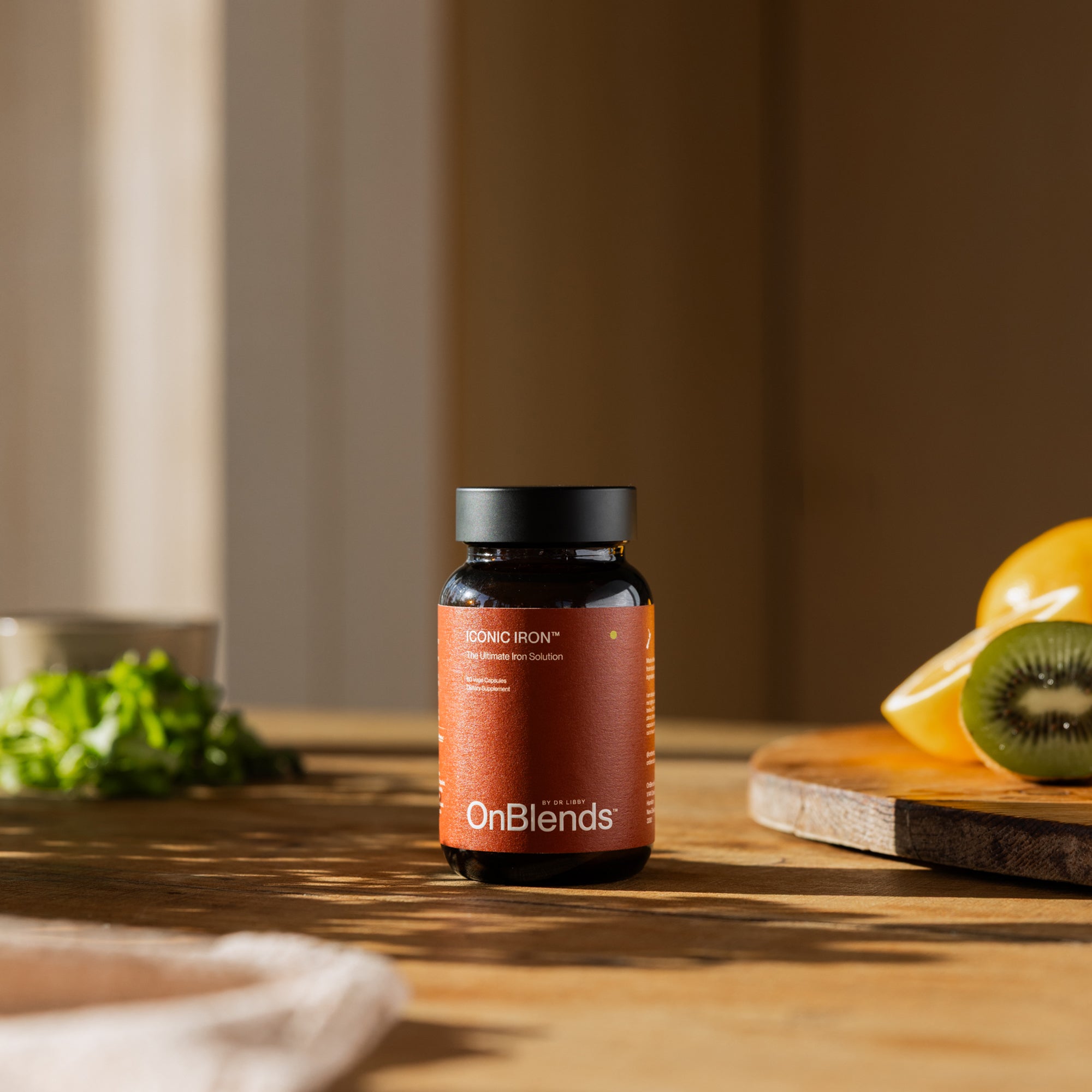
Why we chose ferritin iron for Iconic Iron™
When Dr Libby developed Iconic Iron, the choice of iron was central to the formulation. Rather than using a conventional iron salt, she selected ferritin iron extracted and concentrated from organic peas. And that decision was based on more than its remarkable iron-storage capacity.
Bioavailability
Human research has demonstrated that plant ferritin iron can be readily absorbed and utilised by the body in comparison to other non-haem plant sources of iron.
A distinct absorption pathway
Research suggests intact plant ferritin can enter intestinal cells through receptor-mediated endocytosis, providing a different route from the conventional DMT1 pathway used by ferrous iron.
Digestive tolerability
Ferritin's protective protein structure keeps iron enclosed rather than immediately exposing the digestive tract to free iron. Clinical studies of SloIron®, the pea-derived ferritin iron used in Iconic Iron, have reported good tolerability, with no gastrointestinal adverse events reported.
Evidence of improvements in iron status
A small placebo-controlled clinical trial of SloIron reported significant improvements in haemoglobin and serum ferritin after nine weeks of supplementation. Iconic Iron also brings together carefully selected food-sourced nutrients, including copper from sesame, beta-carotene from carrot and vitamin C from acerola. These nutrients have their own important roles in supporting normal iron metabolism and the body's broader nutritional needs. It's a formulation built around understanding how the body handles iron, rather than simply focusing on the amount of iron printed on a label.
Before adding more, understand what you're taking
Lactoferrin is a fascinating protein. Its antimicrobial functions, iron-binding properties and involvement in immune regulation deserve attention. But those functions shouldn't be confused with proven effectiveness for correcting iron deficiency. The research we've explored raises questions about using lactoferrin as a replacement for iron supplementation and about whether routinely adding it to an existing iron supplement delivers meaningful additional benefits.
If your iron levels are low, understanding why they're low is the first step. Inadequate dietary intake, blood loss, absorption difficulties and other health factors can all contribute, and the appropriate treatment will depend on the cause and severity. Because when it comes to supporting your iron levels, the form of iron, the dose and your body's individual needs all matter.
Curious about what people are experiencing with Iconic Iron?
Beyond the clinical research, we're hearing from people who are seeing meaningful changes in their iron blood test results and how they feel. Explore our Real Results page to read their experiences, including before-and-after ferritin results shared by Iconic Iron customers.